Buy ynh.eu ?
We are moving the project
ynh.eu .
Are you interested in purchasing the domain
ynh.eu ?
domain@kv-gmbh.de · 0541-91531010
Buy ynh.eu ?
What is the difference between "hay que" and "tener que"?
"Hay que" and "tener que" both express the idea of necessity, but they are used in slightly different contexts. "Hay que" is used to express a general obligation or necessity, often referring to a rule, law, or social norm. For example, "Hay que estudiar para tener buenas notas" (One must study to get good grades). On the other hand, "tener que" is used to express a specific obligation or necessity that is related to a particular person or situation. For example, "Tengo que terminar este informe antes de la reunión" (I have to finish this report before the meeting). **
What is the difference between autant que and aussi que?
The main difference between "autant que" and "aussi que" is their usage in comparisons. "Autant que" is used to express equality in comparisons, meaning "as much as" or "as many as." For example, "Il mange autant que moi" (He eats as much as I do). On the other hand, "aussi que" is used to express similarity in comparisons, meaning "as... as." For example, "Elle est aussi belle que sa mère" (She is as beautiful as her mother). Therefore, "autant que" is used for equality, while "aussi que" is used for similarity in comparisons. **

Similar search terms for Que
Top-Angebote
Products related to Que:
-
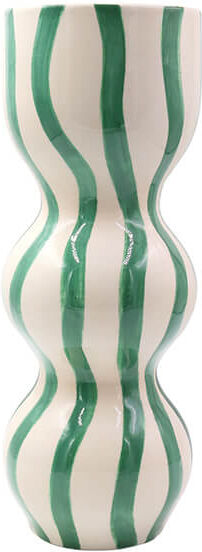
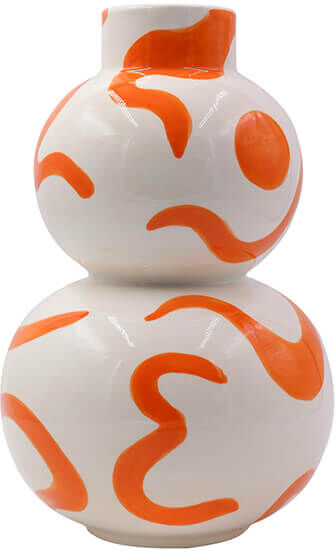
Que Rico Rayas Bailarinas Raquel VaseThis Que Rico Vase Raquel - Rayas Bailarinas is perfect for displaying beautiful fresh flowers or a more permanent dried flower arrangement. Inspired by Spanish lifestyle this colourful Rayas Bailarinas pattern adds a warm and inviting look to your home with the gentle green lines against the beautiful curves of the vase. Handmade and hand painted for a truly unique finish, this vase also makes the perfect gift with the gift packaging included. Dimensions: 34.5(H) x 14(W) x 14(L)cm.52,00 £*Shipping: 0,00 £Secure redirect to the provider
-
Que Rico Fuego Floral Rodrigo VaseThis Que Rico Vase Rodrigo - Fuego Floral is perfect for displaying beautiful fresh flowers or a more permanent dried flower arrangement. Inspired by Spanish lifestyle this Fuego Floral pattern features a combo of pink and orange in a fun wavy design with matching orange handles. Handmade and hand painted for a truly unique finish, this vase also makes the perfect gift with the gift packaging included. Dimensions: 24.5(H) x 13(W) x 21(L)cm.48,00 £*Shipping: 3,50 £Secure redirect to the provider
-
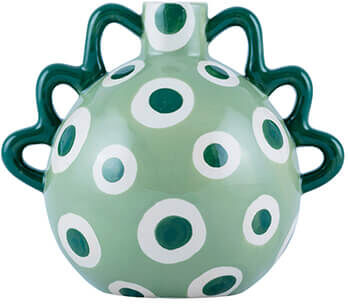
Que Rico Dancing Dots Isidora VaseThis Que Rico Vase Isidora - Dancing Dots is perfect for displaying beautiful fresh flowers or a more permanent dried flower arrangement. Inspired by Spanish lifestyle this Dancing Dots pattern features a colourful and bold design in green and white with a pair of wavy and stylish handles in green. Handmade and hand painted for a truly unique finish, this vase also makes the perfect gift with the gift packaging included. Dimensions: 16.5(H) x 15(W) x 20(L)cm.20,00 £*Shipping: 3,50 £Secure redirect to the provider
-
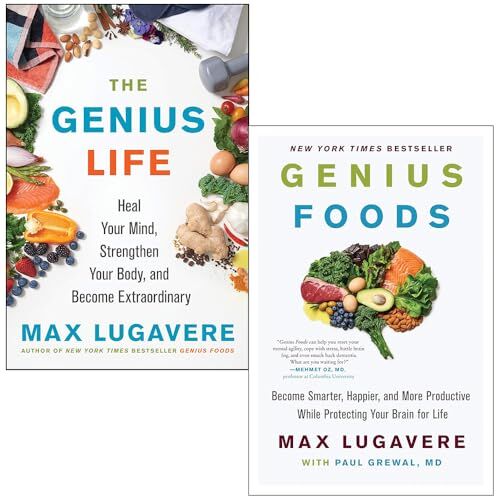
Harper ltd Max Lugavere 2 Book Set – Genius Foods & The Genius Life Brain Health, Nutrition & Wellness CollectionMax Lugavere 2-Book Collection Set (The Genius Life & Genius Foods – Nutrition, Health, Wellness, Diet, Brain & Body Health, Self-Help & Fitness) The Genius Life: Heal Your Mind, Strengthen Your Body, and Become Extraordinary: Supporting the work of Battersea Dogs and Cats Home.Enjoy a heartwarming dog to brighten every single day of the year. From Pickles, the dog who single-handedly saved the 1966 world cup, to Pal, who found silver screen fame as the original Lassie, Battersea's A Dog a Day contains 365 fascinating stories of dogs to enjoy throughout the year.Beautifully packaged and illustrated throughout with charming illustrations of cheeky puppies and hounds, this is the perfect book for any lover of our four-legged friends. Genius Foods: Become Smarter, Happier, and More Productive While Protecting Your Brain for Life: After his mother was diagnosed with a mysterious form of dementia, Max Lugavere put his successful media career on hold to learn everything he could about brain health and performance. For the better half of a decade, he consumed the most up-to-date scientific research, talked to dozens of leading scientists and clinicians around the world, and visited the country’s best neurology departments—all in the hopes of understanding his mother’s condition.Now, in Genius Foods, Lugavere presents a comprehensive guide to brain optimization. He uncovers the stunning link between our dietary and lifestyle choices and our brain functions, revealing how the foods you eat directly affect your ability to focus, learn, remember, create, analyze new ideas, and maintain a balanced mood.12,95 £*Shipping: 2,99 £Secure redirect to the provider

-
How do you know when to use "tener que" or "hay que"?
"Tener que" is used when referring to a specific person or group of people who have an obligation or necessity to do something. For example, "Tengo que estudiar" (I have to study). On the other hand, "Hay que" is used when talking about a general obligation or necessity that applies to everyone. For example, "Hay que respetar las reglas" (One must respect the rules). So, the choice between "tener que" and "hay que" depends on whether the obligation is specific to an individual or more general. **
-
When is the subjunctive used with pienso que and no pienso que?
The subjunctive is used with "pienso que" when there is doubt, uncertainty, or subjectivity in the statement that follows. For example, "No pienso que venga a la fiesta" (I don't think he is coming to the party). In this case, the subjunctive "venga" is used because there is doubt about whether he will come. However, when there is certainty or a fact stated after "pienso que," the indicative mood is used. For example, "Pienso que ella viene a la fiesta" (I think she is coming to the party). **
-
How do you switch between "tienes que" and "hay que" in Spanish?
In Spanish, "tienes que" and "hay que" both express the idea of "have to" or "must." "Tienes que" is used when the subject of the sentence is specified, indicating that someone specific has to do something. On the other hand, "hay que" is used when the subject is not specified, indicating that something must be done in general. For example, "Tienes que estudiar" means "You have to study," while "Hay que estudiar" means "One must study" or "It is necessary to study." **
-
What is the difference in Spanish between "ojalá que" and "espero que"?
The main difference between "ojalá que" and "espero que" in Spanish is the level of certainty or hope expressed. "Ojalá que" is used to express a wish or hope for something to happen, but with a sense of uncertainty or doubt about whether it will actually happen. On the other hand, "espero que" is used to express a hope or expectation for something to happen, with a stronger sense of confidence or belief that it will actually occur. In summary, "ojalá que" conveys a more uncertain hope, while "espero que" conveys a more confident hope. **
What does "qu'est-ce que" and "est-ce que" mean in French?
"Qu'est-ce que" means "what" in French and is used to form a question. For example, "Qu'est-ce que tu fais?" means "What are you doing?" On the other hand, "est-ce que" is a way to form a yes/no question in French. For example, "Est-ce que tu viens?" means "Are you coming?" **
What is the difference between ce que qui and nur que qui?
"Ce que" and "qui" are used in French to introduce relative clauses, while "nur que" and "qui" are used in German. In French, "ce que" is used to introduce a relative clause that functions as the direct object of the main clause, while "qui" is used to introduce a relative clause that functions as the subject of the main clause. In German, "nur que" is used to introduce a relative clause that functions as the direct object of the main clause, while "qui" is used to introduce a relative clause that functions as the subject of the main clause. **
Top-Angebote
Products related to Que:
-
Cornerstone Press Make Me Well: The Truth About the Wellness Industry, Supplements, and Personalised Health by Xand van TullekenIn a world of endless wellness advice, learn how to make smarter decisions about your health with the empowering new book from doctor and broadcaster Xand Van Tulleken. Drawing on original reporting, expert insight and real-world case studies, he explores: The truth about supplements and vitamins ― what works and what doesn’t The rise of at-home blood testing and personalised health plans How wearable technology (fitness trackers, sleep trackers, smartwatches) shapes our behaviour The promises and pitfalls of consumer genomics and DNA testing Why the line between healthcare and the wellness industry has become blurred There has never been a more confusing time to try to be healthy. From supplements and blood testing to wearable technology and consumer genomics, the modern wellness industry promises better energy, performance and longevity. But how much of it is science, and how much is marketing? In his groundbreaking book, Make Me Well, Xand van Tulleken investigates the new Wild West of the wellness industry, offering a clear, evidence-based guide to navigating today’s most popular health trends. With practical advice and accessible science, Make Me Well will help you cut through misinformation, avoid unnecessary costs, and make informed decisions about your physical and mental wellbeing. If you’ve ever wondered which health trends are worth your time and money, this is your essential guide to modern wellness.12,99 £*Shipping: 2,99 £Secure redirect to the provider
-
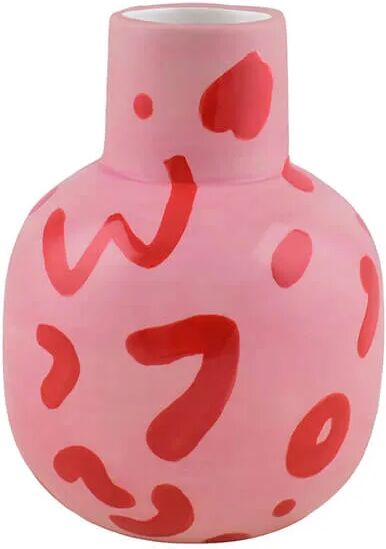
Que Rico Leopardo Lindo Rosita VaseThis Que Rico Vase Rosita - Leopardo Lindo is perfect for displaying beautiful fresh flowers or a more permanent dried flower arrangement. Inspired by Spanish lifestyle this colourful Leopardo Lindo pattern adds a pop of colour to your home with this vibrant red and pink combination. Handmade and hand painted for a truly unique finish, this vase also makes the perfect gift with the gift packaging included. Dimensions: 16(H) x 11.5(W) x 11.5(L)cm.17,60 £*Shipping: 3,50 £Secure redirect to the provider
-
Que Rico Rayas Bailarinas Raquel VaseThis Que Rico Vase Raquel - Rayas Bailarinas is perfect for displaying beautiful fresh flowers or a more permanent dried flower arrangement. Inspired by Spanish lifestyle this colourful Rayas Bailarinas pattern adds a warm and inviting look to your home with the gentle green lines against the beautiful curves of the vase. Handmade and hand painted for a truly unique finish, this vase also makes the perfect gift with the gift packaging included. Dimensions: 34.5(H) x 14(W) x 14(L)cm.52,00 £*Shipping: 0,00 £Secure redirect to the provider
-
Que Rico Fuego Floral Rodrigo VaseThis Que Rico Vase Rodrigo - Fuego Floral is perfect for displaying beautiful fresh flowers or a more permanent dried flower arrangement. Inspired by Spanish lifestyle this Fuego Floral pattern features a combo of pink and orange in a fun wavy design with matching orange handles. Handmade and hand painted for a truly unique finish, this vase also makes the perfect gift with the gift packaging included. Dimensions: 24.5(H) x 13(W) x 21(L)cm.48,00 £*Shipping: 3,50 £Secure redirect to the provider
-
What is the difference between "hay que" and "tener que"?
"Hay que" and "tener que" both express the idea of necessity, but they are used in slightly different contexts. "Hay que" is used to express a general obligation or necessity, often referring to a rule, law, or social norm. For example, "Hay que estudiar para tener buenas notas" (One must study to get good grades). On the other hand, "tener que" is used to express a specific obligation or necessity that is related to a particular person or situation. For example, "Tengo que terminar este informe antes de la reunión" (I have to finish this report before the meeting). **
-
What is the difference between autant que and aussi que?
The main difference between "autant que" and "aussi que" is their usage in comparisons. "Autant que" is used to express equality in comparisons, meaning "as much as" or "as many as." For example, "Il mange autant que moi" (He eats as much as I do). On the other hand, "aussi que" is used to express similarity in comparisons, meaning "as... as." For example, "Elle est aussi belle que sa mère" (She is as beautiful as her mother). Therefore, "autant que" is used for equality, while "aussi que" is used for similarity in comparisons. **
-
How do you know when to use "tener que" or "hay que"?
"Tener que" is used when referring to a specific person or group of people who have an obligation or necessity to do something. For example, "Tengo que estudiar" (I have to study). On the other hand, "Hay que" is used when talking about a general obligation or necessity that applies to everyone. For example, "Hay que respetar las reglas" (One must respect the rules). So, the choice between "tener que" and "hay que" depends on whether the obligation is specific to an individual or more general. **
-
When is the subjunctive used with pienso que and no pienso que?
The subjunctive is used with "pienso que" when there is doubt, uncertainty, or subjectivity in the statement that follows. For example, "No pienso que venga a la fiesta" (I don't think he is coming to the party). In this case, the subjunctive "venga" is used because there is doubt about whether he will come. However, when there is certainty or a fact stated after "pienso que," the indicative mood is used. For example, "Pienso que ella viene a la fiesta" (I think she is coming to the party). **
Similar search terms for Que
-
Que Rico Dancing Dots Isidora VaseThis Que Rico Vase Isidora - Dancing Dots is perfect for displaying beautiful fresh flowers or a more permanent dried flower arrangement. Inspired by Spanish lifestyle this Dancing Dots pattern features a colourful and bold design in green and white with a pair of wavy and stylish handles in green. Handmade and hand painted for a truly unique finish, this vase also makes the perfect gift with the gift packaging included. Dimensions: 16.5(H) x 15(W) x 20(L)cm.20,00 £*Shipping: 3,50 £Secure redirect to the provider
-
Harper ltd Max Lugavere 2 Book Set – Genius Foods & The Genius Life Brain Health, Nutrition & Wellness CollectionMax Lugavere 2-Book Collection Set (The Genius Life & Genius Foods – Nutrition, Health, Wellness, Diet, Brain & Body Health, Self-Help & Fitness) The Genius Life: Heal Your Mind, Strengthen Your Body, and Become Extraordinary: Supporting the work of Battersea Dogs and Cats Home.Enjoy a heartwarming dog to brighten every single day of the year. From Pickles, the dog who single-handedly saved the 1966 world cup, to Pal, who found silver screen fame as the original Lassie, Battersea's A Dog a Day contains 365 fascinating stories of dogs to enjoy throughout the year.Beautifully packaged and illustrated throughout with charming illustrations of cheeky puppies and hounds, this is the perfect book for any lover of our four-legged friends. Genius Foods: Become Smarter, Happier, and More Productive While Protecting Your Brain for Life: After his mother was diagnosed with a mysterious form of dementia, Max Lugavere put his successful media career on hold to learn everything he could about brain health and performance. For the better half of a decade, he consumed the most up-to-date scientific research, talked to dozens of leading scientists and clinicians around the world, and visited the country’s best neurology departments—all in the hopes of understanding his mother’s condition.Now, in Genius Foods, Lugavere presents a comprehensive guide to brain optimization. He uncovers the stunning link between our dietary and lifestyle choices and our brain functions, revealing how the foods you eat directly affect your ability to focus, learn, remember, create, analyze new ideas, and maintain a balanced mood.12,95 £*Shipping: 2,99 £Secure redirect to the provider
-
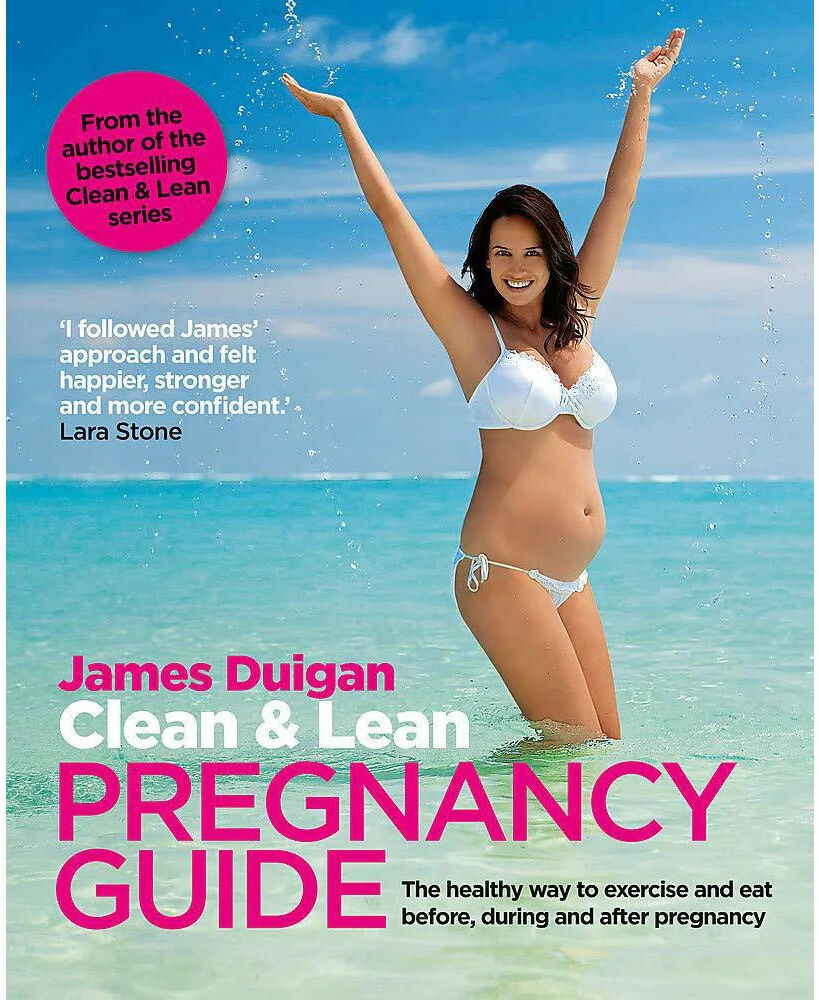
Kyle Books Clean & Lean Pregnancy Guide by James Duigan - Paperback Wellness Book - Fertility, Pregnancy & Post-Natal Exercise & Nutrition GuideThe Clean and Lean Pregnancy Guide by James Duigan is a health and wellness book that applies his popular Clean and Lean philosophy to the journey of becoming a mother. Covering fertility, pregnancy, and the post-natal period, this paperback guide offers gentle, trimester-appropriate exercises and straightforward eating advice for every stage. Written with warmth and drawn from Duigan's own experience as a first-time parent, it is designed to help expectant mothers feel strong, calm, and well-supported from bump to baby and beyond. The book includes a foreword by model Lara Stone and is published by Kyle Books.2,99 £*Shipping: 2,99 £Secure redirect to the provider
-
Que Rico Sol Y Sombra Isla VaseThis Que Rico Vase Isla - Sol Y Sombra is perfect for displaying beautiful fresh flowers or a more permanent dried flower arrangement. Inspired by Spanish lifestyle this colourful Sol Y Sambra pattern adds a ray of sunshine to your home. Handmade and hand painted for a truly unique finish, this vase also makes the perfect gift with the gift packaging included. Dimensions: 28(H) x 18(W) x 18(L)cm.50,40 £*Shipping: 0,00 £Secure redirect to the provider
-
How do you switch between "tienes que" and "hay que" in Spanish?
In Spanish, "tienes que" and "hay que" both express the idea of "have to" or "must." "Tienes que" is used when the subject of the sentence is specified, indicating that someone specific has to do something. On the other hand, "hay que" is used when the subject is not specified, indicating that something must be done in general. For example, "Tienes que estudiar" means "You have to study," while "Hay que estudiar" means "One must study" or "It is necessary to study." **
-
What is the difference in Spanish between "ojalá que" and "espero que"?
The main difference between "ojalá que" and "espero que" in Spanish is the level of certainty or hope expressed. "Ojalá que" is used to express a wish or hope for something to happen, but with a sense of uncertainty or doubt about whether it will actually happen. On the other hand, "espero que" is used to express a hope or expectation for something to happen, with a stronger sense of confidence or belief that it will actually occur. In summary, "ojalá que" conveys a more uncertain hope, while "espero que" conveys a more confident hope. **
-
What does "qu'est-ce que" and "est-ce que" mean in French?
"Qu'est-ce que" means "what" in French and is used to form a question. For example, "Qu'est-ce que tu fais?" means "What are you doing?" On the other hand, "est-ce que" is a way to form a yes/no question in French. For example, "Est-ce que tu viens?" means "Are you coming?" **
-
What is the difference between ce que qui and nur que qui?
"Ce que" and "qui" are used in French to introduce relative clauses, while "nur que" and "qui" are used in German. In French, "ce que" is used to introduce a relative clause that functions as the direct object of the main clause, while "qui" is used to introduce a relative clause that functions as the subject of the main clause. In German, "nur que" is used to introduce a relative clause that functions as the direct object of the main clause, while "qui" is used to introduce a relative clause that functions as the subject of the main clause. **
* All prices are inclusive of VAT and, if applicable, plus shipping costs. The offer information is based on the details provided by the respective shop and is updated through automated processes. Real-time updates do not occur, so deviations can occur in individual cases. ** Note: Parts of this content were created by AI.