Buy ynh.eu ?
We are moving the project
ynh.eu .
Are you interested in purchasing the domain
ynh.eu ?
domain@kv-gmbh.de · 0541-91531010
Buy ynh.eu ?
What is the space-time continuum?
The space-time continuum is a concept in physics that combines the three dimensions of space with the fourth dimension of time into a single four-dimensional continuum. It is a fundamental framework in understanding the universe and how objects move and interact within it. According to the theory of relativity, the space-time continuum is curved by the presence of mass and energy, leading to phenomena such as gravity. This concept revolutionized our understanding of the universe and has been crucial in the development of modern physics. **
How does time pass in space?
Time in space passes differently than on Earth due to the effects of gravity and the speed at which objects are moving. According to Einstein's theory of relativity, time passes more slowly for objects in motion or in strong gravitational fields. This means that astronauts in space experience time passing at a slightly different rate than people on Earth. This phenomenon, known as time dilation, has been confirmed through experiments and observations of objects in space. As a result, astronauts on the International Space Station, for example, age slightly slower than people on Earth due to their high speed and distance from Earth's gravitational pull. **


Similar search terms for Space-time
Top-Angebote
Products related to Space-time:
-
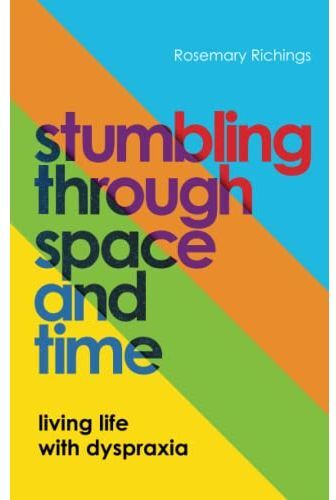
Jessica Kingsley Publishers Stumbling through Space and Time: Living Life with Dyspraxia"In 1994, I was diagnosed with dyspraxia, and I was unable to do everything that children are expected to do by the time they're in school. For me, this included everything from riding a bike and catching a ball, to reading, writing, and basic math."When talking about her dyspraxia, Rosemary Richings is often met with confusion. Why do so few people understand dyspraxia, or even know what it is?Rosemary shares her experience of growing up dyspraxic, and how it impacts her sense of space, time and co-ordination. Diagnosed with DCD at the age of four, Rosemary shares her insights and experience dealing with challenges, from coping with bullies in school to choosing a dyspraxia-friendly university, pursuing self-employment and travelling abroad. Rosemary shares guidance for others about what helped her develop her skills, including ballet and gymnastics, the Wilbarger Protocol (brushing therapy) and equestrian therapy. Full of practical tips and insights into the strategies that gave Rosemary the confidence to succeed, this is an essential guide for other dyspraxics and those supporting them, which shows you how you too can thrive as a dyspraxic person.14,99 £*Shipping: 2,99 £Secure redirect to the provider
-
Space Cowboys Unlock! Timeless Adventures Card Game - Circus, Paris, Time Travel - 1 Player - Adult & ChildCooperative card game featuring three adventures: Circus, Paris, and Time Travel. Includes app support for hints and challenges. Designed for 1 to 6 players.24,98 £*Shipping: 3,95 £Secure redirect to the provider
-
Tor (Pan Macmillan) Children of Time Series 4-Book Set by Adrian Tchaikovsky - Sci-Fi Space Opera Collection (Children of Time, Ruin, Memory, Strife)This four-book set by Adrian Tchaikovsky brings together the celebrated Children of Time saga: Children of Time, Children of Ruin, Children of Memory, and Children of Strife. Spanning collapsed empires, terraformed worlds, and uploaded minds, the series follows humanity's last survivors as they collide with radically different forms of intelligence across deep time. The sequence rewards readers who enjoy hard science fiction built on evolution, first contact, and civilization-building among the stars. The series has been widely praised for its ambitious scope and is a great addition to any science fiction collection.35,99 £*Shipping: 0,00 £Secure redirect to the provider



-
What came first, time or space?
The concept of time and space are intertwined and are both fundamental aspects of the universe. However, according to the current understanding in physics, space and time are thought to have emerged simultaneously during the Big Bang, the event that marked the beginning of the universe. This means that it is not possible to definitively say which came first, as they are both interconnected and emerged together. **
-
What is Time and Space 2?
Time and Space 2 is a video game developed by a small indie studio. It is a sequel to the original Time and Space game and is a puzzle-platformer that challenges players to navigate through various levels using time manipulation and spatial reasoning. The game features a unique art style and an engaging soundtrack, creating an immersive experience for players. Time and Space 2 offers a mix of challenging puzzles and fast-paced platforming, making it an enjoyable and thought-provoking gaming experience. **
-
Does time run slower in space?
Yes, time runs slower in space compared to on Earth. This is due to the phenomenon of time dilation, which occurs as a result of the theory of relativity. The stronger the gravitational field, the slower time runs, so in the weaker gravitational field of space, time runs slower. This has been confirmed through experiments and observations, such as with atomic clocks on satellites. **
-
What is beyond space and time?
Beyond space and time, there may be other dimensions or realms that are not bound by the laws of physics as we understand them. Some theories suggest the existence of parallel universes or alternate realities that exist outside of our own space-time continuum. Others propose the idea of a multiverse, where an infinite number of universes exist simultaneously. Ultimately, what lies beyond space and time is still a mystery and subject to ongoing scientific exploration and philosophical speculation. **

Is there a time in space?
Time in space is a complex concept due to the theory of relativity. According to this theory, time is relative and can be experienced differently depending on the observer's speed and position in space. This means that time can be perceived differently for astronauts in space compared to people on Earth. Therefore, while time exists in space, it is not a fixed or absolute concept. **
Can time pass faster in outer space?
Time does not pass faster in outer space, but it can appear to pass differently due to the effects of gravity and velocity. According to Einstein's theory of relativity, time can be experienced differently depending on the observer's frame of reference. In areas of strong gravitational fields or high velocity, time can appear to pass more slowly relative to a stationary observer. This means that astronauts in space may experience slightly slower time compared to people on Earth, but it is not a matter of time passing faster in outer space. **
Top-Angebote
Products related to Space-time:
-
Inspire Curations Dragon Ball Space Time Ring Anime Inspired Adjustable Cosplay Ring Dragon Ball Space Time Ring Anime Inspired Adjustable Cosplay RingSome accessories speak instantly to fans. This animeinspired ring channels the iconic power and mystique of Dragon Ballstyle worlds, making it a bold statement piece for everyday wear or cosplay. Designed with a dimensional, spacetime look, it...90,95 $*Shipping: 0,00 $Secure redirect to the provider
-
Uplift Essentials Retro Time Space Ring Gothic Adjustable Open Metal Ring Anime Jewelry Gift Retro Time Space Ring Gothic Adjustable Open Metal Ring Anime Jewelry GiftAdding a bold statement piece to your daily outfit or anime cosplay collection shouldn't mean dealing with cheap, fragile jewelry that bends or turns your skin green. Designed for anime enthusiasts, gothic fashion lovers, and punk style collectors,...32,97 $*Shipping: 0,00 $Secure redirect to the provider
-
Jessica Kingsley Publishers Stumbling through Space and Time: Living Life with Dyspraxia"In 1994, I was diagnosed with dyspraxia, and I was unable to do everything that children are expected to do by the time they're in school. For me, this included everything from riding a bike and catching a ball, to reading, writing, and basic math."When talking about her dyspraxia, Rosemary Richings is often met with confusion. Why do so few people understand dyspraxia, or even know what it is?Rosemary shares her experience of growing up dyspraxic, and how it impacts her sense of space, time and co-ordination. Diagnosed with DCD at the age of four, Rosemary shares her insights and experience dealing with challenges, from coping with bullies in school to choosing a dyspraxia-friendly university, pursuing self-employment and travelling abroad. Rosemary shares guidance for others about what helped her develop her skills, including ballet and gymnastics, the Wilbarger Protocol (brushing therapy) and equestrian therapy. Full of practical tips and insights into the strategies that gave Rosemary the confidence to succeed, this is an essential guide for other dyspraxics and those supporting them, which shows you how you too can thrive as a dyspraxic person.14,99 £*Shipping: 2,99 £Secure redirect to the provider
-
What is the space-time continuum?
The space-time continuum is a concept in physics that combines the three dimensions of space with the fourth dimension of time into a single four-dimensional continuum. It is a fundamental framework in understanding the universe and how objects move and interact within it. According to the theory of relativity, the space-time continuum is curved by the presence of mass and energy, leading to phenomena such as gravity. This concept revolutionized our understanding of the universe and has been crucial in the development of modern physics. **
-
How does time pass in space?
Time in space passes differently than on Earth due to the effects of gravity and the speed at which objects are moving. According to Einstein's theory of relativity, time passes more slowly for objects in motion or in strong gravitational fields. This means that astronauts in space experience time passing at a slightly different rate than people on Earth. This phenomenon, known as time dilation, has been confirmed through experiments and observations of objects in space. As a result, astronauts on the International Space Station, for example, age slightly slower than people on Earth due to their high speed and distance from Earth's gravitational pull. **
-
What came first, time or space?
The concept of time and space are intertwined and are both fundamental aspects of the universe. However, according to the current understanding in physics, space and time are thought to have emerged simultaneously during the Big Bang, the event that marked the beginning of the universe. This means that it is not possible to definitively say which came first, as they are both interconnected and emerged together. **
-
What is Time and Space 2?
Time and Space 2 is a video game developed by a small indie studio. It is a sequel to the original Time and Space game and is a puzzle-platformer that challenges players to navigate through various levels using time manipulation and spatial reasoning. The game features a unique art style and an engaging soundtrack, creating an immersive experience for players. Time and Space 2 offers a mix of challenging puzzles and fast-paced platforming, making it an enjoyable and thought-provoking gaming experience. **
Similar search terms for Space-time
-
Space Cowboys Unlock! Timeless Adventures Card Game - Circus, Paris, Time Travel - 1 Player - Adult & ChildCooperative card game featuring three adventures: Circus, Paris, and Time Travel. Includes app support for hints and challenges. Designed for 1 to 6 players.24,98 £*Shipping: 3,95 £Secure redirect to the provider
-
Tor (Pan Macmillan) Children of Time Series 4-Book Set by Adrian Tchaikovsky - Sci-Fi Space Opera Collection (Children of Time, Ruin, Memory, Strife)This four-book set by Adrian Tchaikovsky brings together the celebrated Children of Time saga: Children of Time, Children of Ruin, Children of Memory, and Children of Strife. Spanning collapsed empires, terraformed worlds, and uploaded minds, the series follows humanity's last survivors as they collide with radically different forms of intelligence across deep time. The sequence rewards readers who enjoy hard science fiction built on evolution, first contact, and civilization-building among the stars. The series has been widely praised for its ambitious scope and is a great addition to any science fiction collection.35,99 £*Shipping: 0,00 £Secure redirect to the provider
-
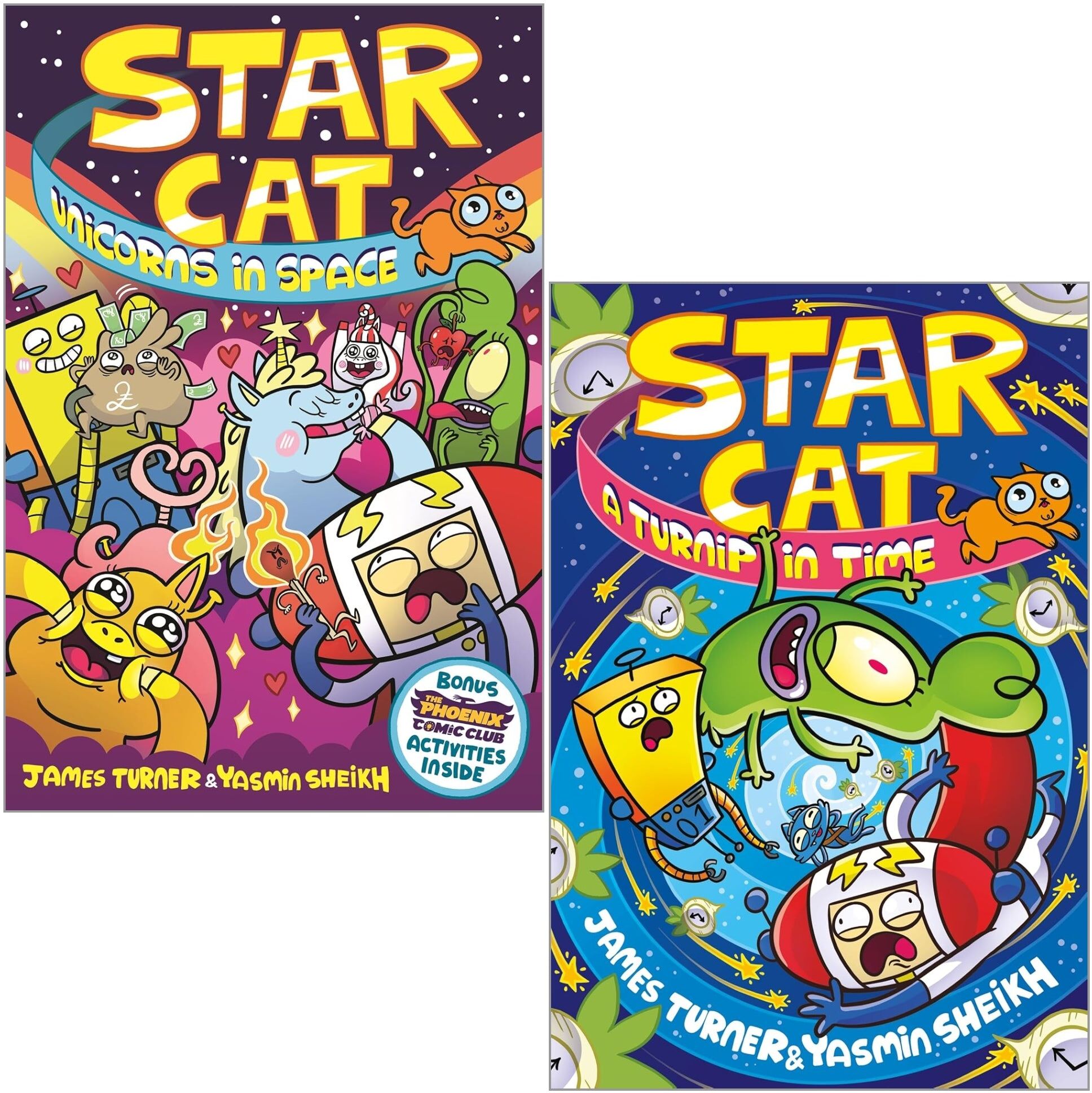
Phoenix Star Cat Series 2 Books Collection Set by James Turner (A Turnip in Time!, Unicorns in Space!)Star Cat Series 2 Books Collection Set by James Turner (A Turnip in Time!, Unicorns in Space!) A Turnip in Time! Space has never EVER been so silly, so join Captain Spaceington and Co at the final frontier of laughter! From the space slugs wreaking havoc at the Space Prettiest Flower competition, to the flativerse where everything is two-dimensional (top tip: you can only enter the flativerse when flattened by a giant mallet), life onboard the SS Star Cat is never dull! Unicorns in Space! After destroying a highly advanced civilization by littering, Robot One is taken to meet his match - space unicorns, bursting with unbearable loveliness! What will Robot One's selfishness do to the galaxy's sweetest creatures? Will he see the error of his ways? Will either emerge unscathed? Will you ever stop laughing at what happens?!15,95 £*Shipping: 2,99 £Secure redirect to the provider
-
Cornerstone Press Make Me Well: The Truth About the Wellness Industry, Supplements, and Personalised Health by Xand van TullekenIn a world of endless wellness advice, learn how to make smarter decisions about your health with the empowering new book from doctor and broadcaster Xand Van Tulleken. Drawing on original reporting, expert insight and real-world case studies, he explores: The truth about supplements and vitamins ― what works and what doesn’t The rise of at-home blood testing and personalised health plans How wearable technology (fitness trackers, sleep trackers, smartwatches) shapes our behaviour The promises and pitfalls of consumer genomics and DNA testing Why the line between healthcare and the wellness industry has become blurred There has never been a more confusing time to try to be healthy. From supplements and blood testing to wearable technology and consumer genomics, the modern wellness industry promises better energy, performance and longevity. But how much of it is science, and how much is marketing? In his groundbreaking book, Make Me Well, Xand van Tulleken investigates the new Wild West of the wellness industry, offering a clear, evidence-based guide to navigating today’s most popular health trends. With practical advice and accessible science, Make Me Well will help you cut through misinformation, avoid unnecessary costs, and make informed decisions about your physical and mental wellbeing. If you’ve ever wondered which health trends are worth your time and money, this is your essential guide to modern wellness.12,99 £*Shipping: 2,99 £Secure redirect to the provider
-
Does time run slower in space?
Yes, time runs slower in space compared to on Earth. This is due to the phenomenon of time dilation, which occurs as a result of the theory of relativity. The stronger the gravitational field, the slower time runs, so in the weaker gravitational field of space, time runs slower. This has been confirmed through experiments and observations, such as with atomic clocks on satellites. **
-
What is beyond space and time?
Beyond space and time, there may be other dimensions or realms that are not bound by the laws of physics as we understand them. Some theories suggest the existence of parallel universes or alternate realities that exist outside of our own space-time continuum. Others propose the idea of a multiverse, where an infinite number of universes exist simultaneously. Ultimately, what lies beyond space and time is still a mystery and subject to ongoing scientific exploration and philosophical speculation. **
-
Is there a time in space?
Time in space is a complex concept due to the theory of relativity. According to this theory, time is relative and can be experienced differently depending on the observer's speed and position in space. This means that time can be perceived differently for astronauts in space compared to people on Earth. Therefore, while time exists in space, it is not a fixed or absolute concept. **
-
Can time pass faster in outer space?
Time does not pass faster in outer space, but it can appear to pass differently due to the effects of gravity and velocity. According to Einstein's theory of relativity, time can be experienced differently depending on the observer's frame of reference. In areas of strong gravitational fields or high velocity, time can appear to pass more slowly relative to a stationary observer. This means that astronauts in space may experience slightly slower time compared to people on Earth, but it is not a matter of time passing faster in outer space. **
* All prices are inclusive of VAT and, if applicable, plus shipping costs. The offer information is based on the details provided by the respective shop and is updated through automated processes. Real-time updates do not occur, so deviations can occur in individual cases. ** Note: Parts of this content were created by AI.